

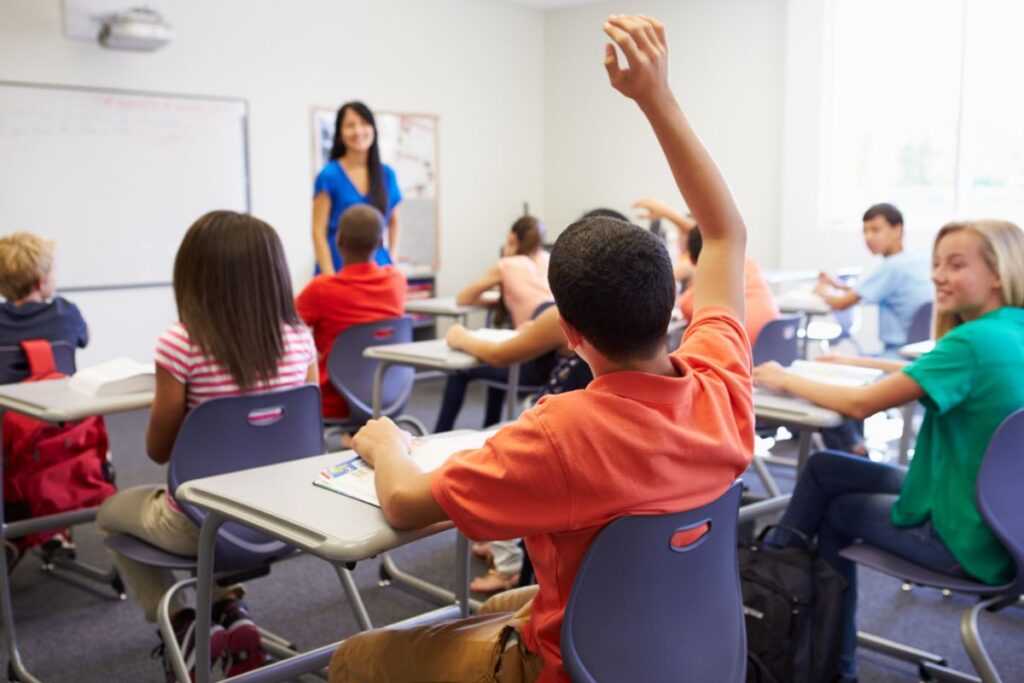
In a world that often equates size with prestige, it can be easy to overlook what smaller independent schools bring to the table. Yet for many families, a school’s scale is not a limitation – it is one of its most compelling features.
Smaller schools offer a fundamentally different kind of experience. One in which every child is known, every contribution matters, and the culture of the school is shaped by genuine relationships rather than institutional processes.
Everyone Knows Your Name
The most immediate difference between a small school and a larger one is visibility. In a school where the roll numbers in the hundreds rather than the thousands, children are not anonymous. Teachers know their students as individuals – their learning styles, their enthusiasms, their anxieties, and their particular brand of humour.
This familiarity has real academic consequences. Research consistently shows that children perform better when they feel known and valued by the adults around them. In a smaller school, that sense of being seen is structural, not incidental.
Leadership Opportunities for All
In larger schools, leadership roles – head boy or girl, prefect, team captain, lead in the school play – are inevitably limited in number. Competition for these positions can be fierce, and many capable, motivated students simply miss out.
In a smaller school, those opportunities multiply. More children take on responsibility, lead initiatives, and represent their peers. The effect on confidence and self-awareness is significant. Children who might otherwise have remained quietly in the background find their voices and discover capabilities they did not know they had.
A Tighter Community
Schools that operate on a smaller scale tend to develop particularly strong communities. Parents are more closely connected to school life, events feel genuinely shared, and the relationships between year groups are often warmer and more sustained.
Many forward-thinking educational settings that prioritise genuine community – such as those offered by Old Vicarage School, an independent preparatory school in Richmond – demonstrate that the quality of a school’s culture owes far more to the care invested in relationships than to the scale of its buildings or resources.
Flexibility and Responsiveness
Smaller schools are often more agile than their larger counterparts. When a child needs additional support, the response can be swift. When a new opportunity arises – a visiting speaker, a creative project, a community partnership – it can be embraced without months of institutional planning.
This responsiveness extends to curriculum and enrichment. Smaller schools frequently develop distinctive characters, areas of specialism, and approaches to learning that reflect the vision of their leaders and the needs of their particular community. That kind of coherence is harder to achieve at scale.
The Question of Transition
Parents sometimes wonder whether a small school will leave their child ill-prepared for the larger environments they will encounter later in life. The evidence suggests otherwise. Children from smaller schools tend to be socially confident, accustomed to taking initiative, and skilled at forming genuine connections – precisely the qualities needed to thrive in a larger secondary school or beyond.
*This is a collaborative post


